EtherNet/IP Agent
Efficient commissioning with “Agent Blond” - New data source for the PLC diagnostics

EtherNet/IP Diagnostic Agent simplifies commissioning
During commissioning, the focus is on functional and quality testing of individual system components. Under time pressure, however, unexpected and non-reproducible anomalies in EtherNet/IP communication often occur. This is not unusual, as shown by the “bathtub curve” in the graphic below. Still, the recurring question remains: Why now, when everything has already worked flawlessly before?
A high error rate at the beginning is not unique to electrical, mechanical, or network systems. It is a normal and necessary phase when transitioning a machine or plant into continuous operation and ensuring long-term availability. It only becomes problematic when this phase is unexpectedly prolonged - because device failures reappear at different points in the network over time. This is frustrating, time-consuming, and ultimately costly due to unexpected downtime.
 Bathtub effect
To quickly remedy the situation, affected devices that the PLC reports as failed are often declared defective and replaced. Not infrequently, this cycle repeats several times until the actual cause is identified - a faulty backbone cable.
Typically, the PLC (scanner) monitors the communication of the EtherNet/IP adapter (application level). The first place to check is therefore the built-in PLC diagnostics, which provides extensive information. However, in this context the PLC diagnostics recognizes only two states: “working” or “not working”- in other words, green or red.
Using the traffic light metaphor, it becomes clear that the yellow range - information and warnings - is completely missing, even though parameters exist that could make this visible.
Assuming that apart from a power failure there are no truly sudden and unforeseeable faults, the question arises: How can a failure be predicted, or at least more precisely localized and described?
Telegram analysis cycle with EtherNet/IP Agent “Agent Blond”

Agent Blond makes information usable for the PLC.
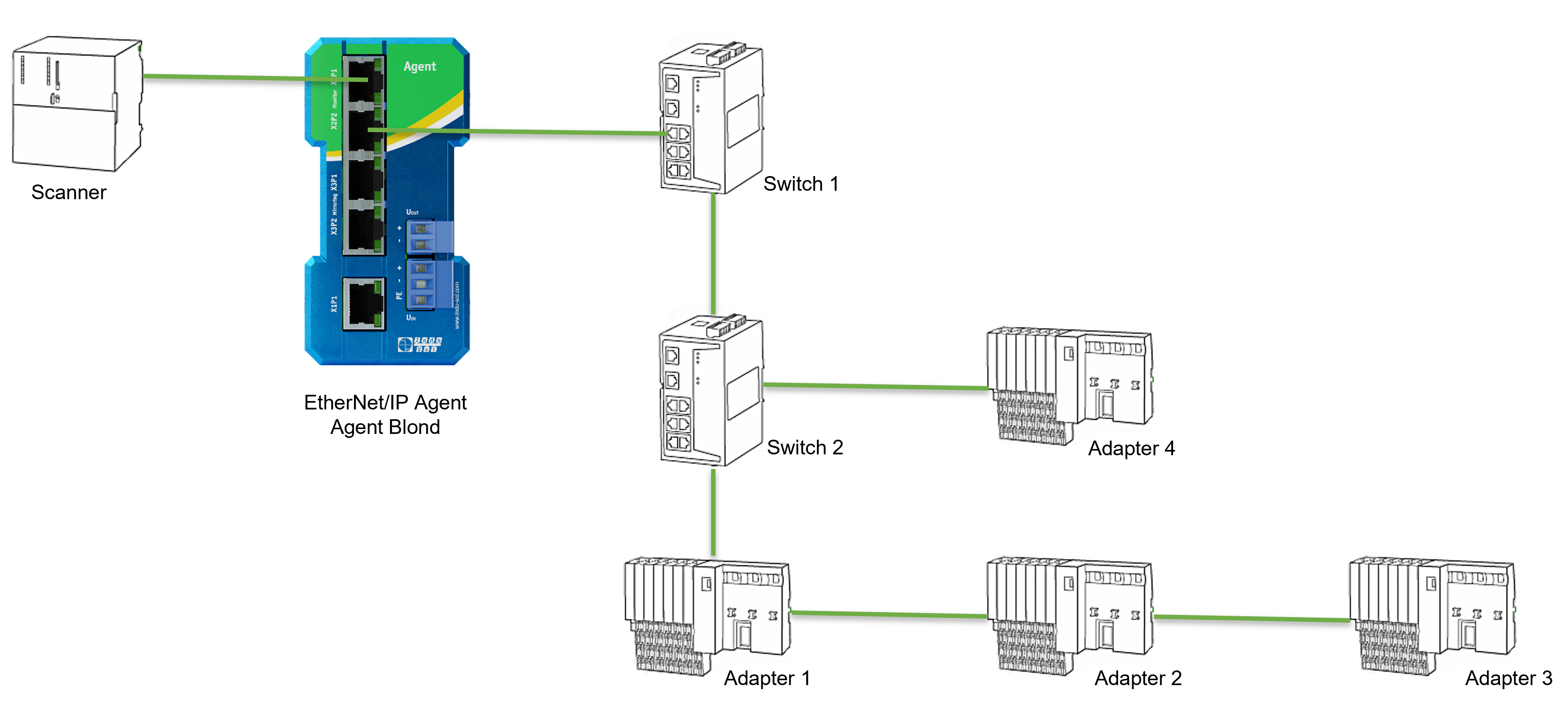
This is where the EtherNet/IP Agent “Agent Blond” from Indu-Sol comes in. It is integrated into the network as a non-intrusive measurement point to monitor network communication (a silent listener). Such a measurement point (TAP) is already installed in many systems - so this in itself is nothing new. The difference lies in the intelligence with which the Agent is equipped.
By integrating into the PLC configuration and reporting anomalies directly to the PLC, it ensures that information about abnormalities in EtherNet/IP communication is available through the familiar reporting path in the PLC diagnostics
How does “Agent Blond” work?
To answer this, we need to take a closer look at EtherNet/IP communication.
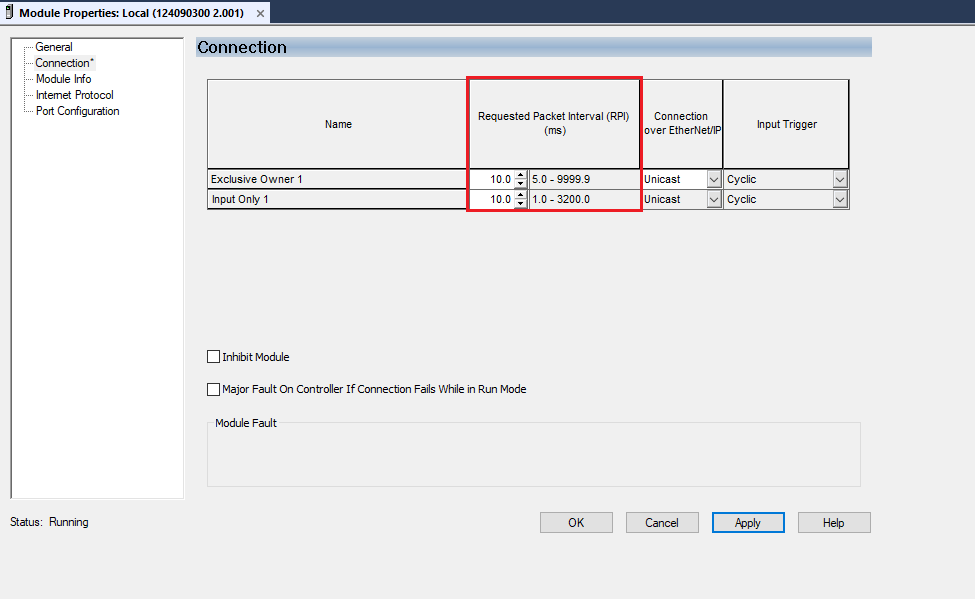
Each device in the network requires a certain transmission time to send its information (RPI - Requested Packet Interval). To ensure reliable transmission, the communication protocol provides an additional time buffer (response monitoring time - Timeout Multiplier), usually set to four times the update time. Often, the user is unable to change this timeout either.
If data transmission does not succeed within this buffer, the system switches to a safe state - the communication with the device is terminated. Traceability is achieved by detecting telegram gaps or packet loss, since every missed transmission leaves a gap at the receiver.
In the PLC’s default settings, up to two gaps are tolerated and therefore not recorded in the PLC diagnostics. In other words: “Everything is fine - no irregularities.” Only when more than two telegram gaps occur does the system switch to an error state (terminating communication with the device). The trigger for this is the timeout being exceeded.
Excerpt from the Studio 5000: EtherNet/IP default setting
RPI: Defines the transmission interval of each device.
The occurrence of a telegram gap is a reliable early indicator and therefore an important piece of information for assessing EtherNet/IP data traffic quality. A device-related message provides a clear view of the network topology, making it possible to precisely identify the cause (faulty cable, backbone connection, connector, device) or the origin (EMC issues). Equally important is the ability to verify the success of a device replacement through before-and-after comparison.
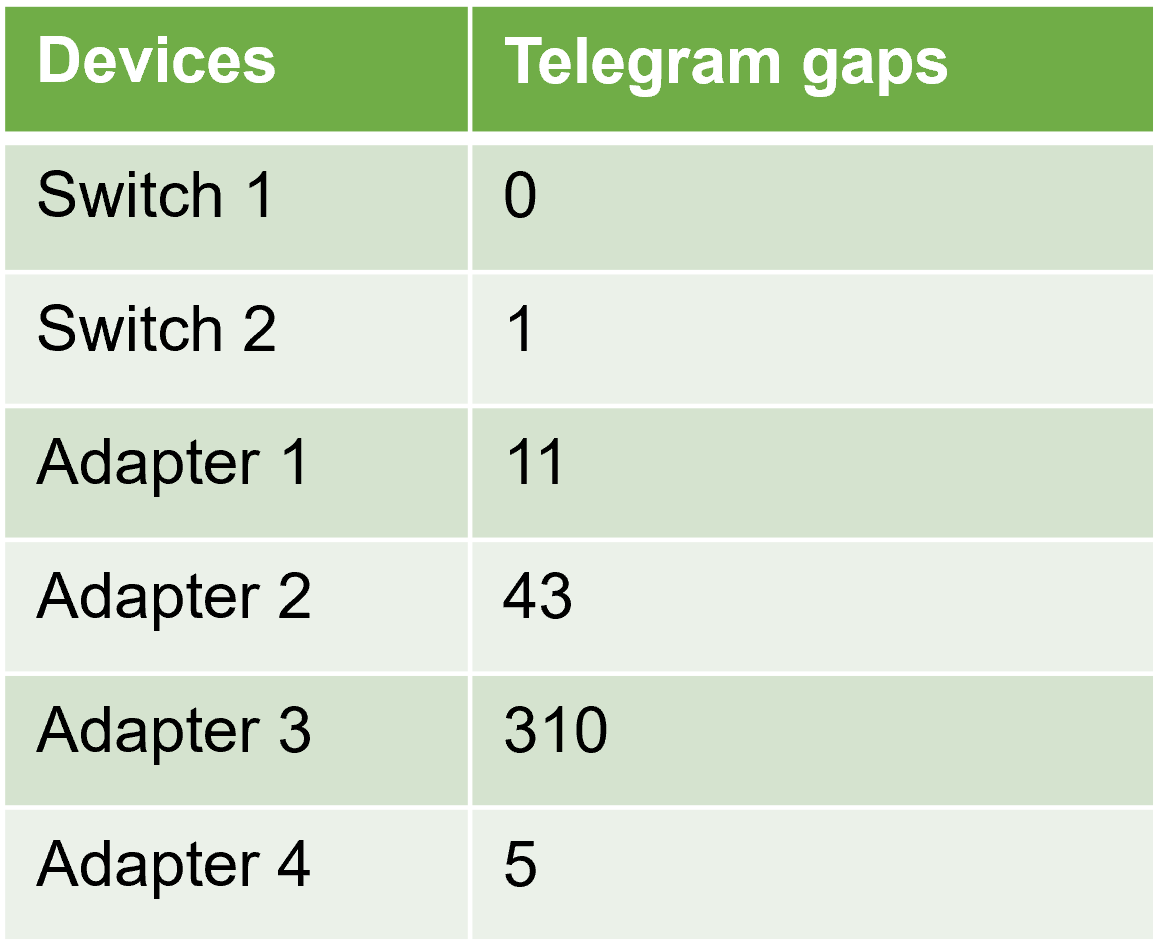

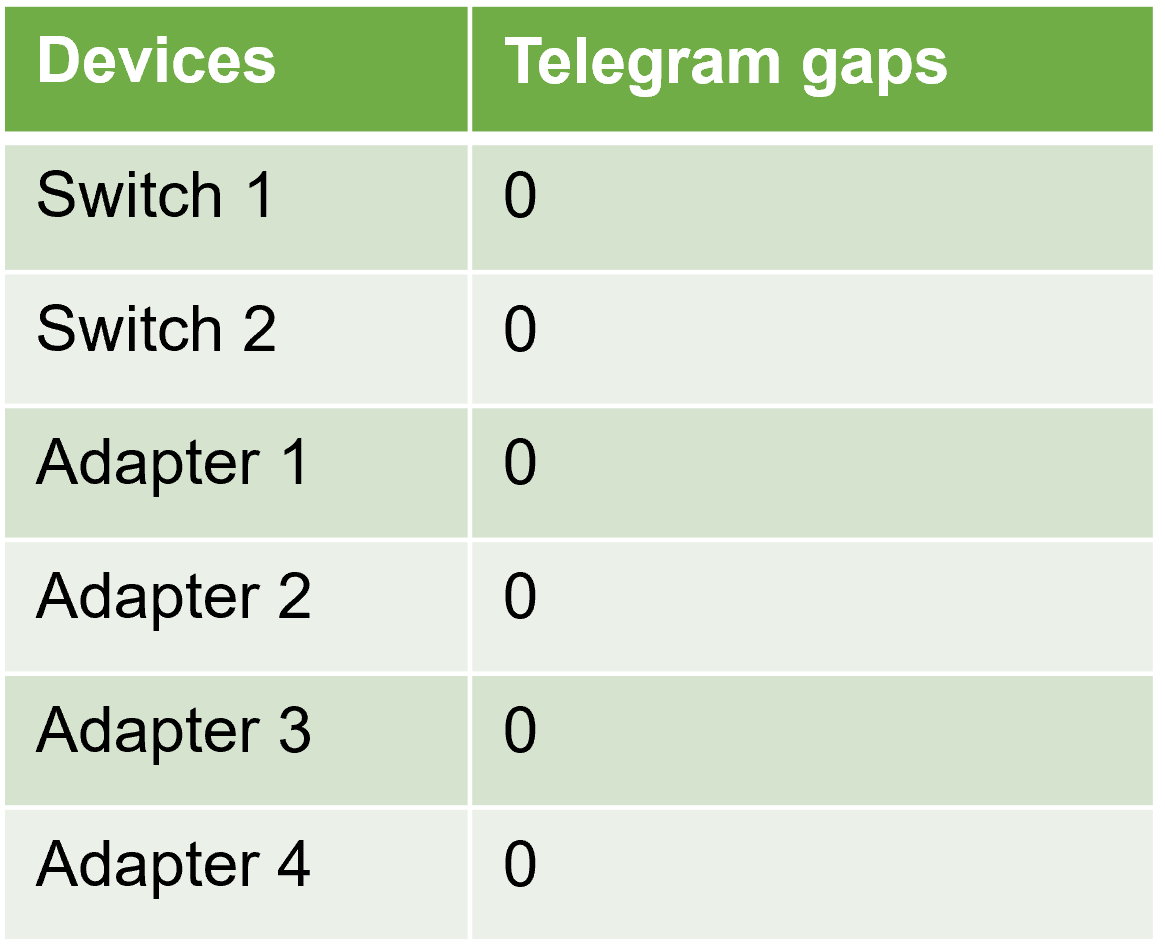
Installation location of the EtherNet/IP Agent in the EtherNet/IP network
Product Details
Media library
Downloads
EtherNet/IP Agent StarterKIT includes:
- EtherNet/IP Agent - "Agent Blond"
- Plug-in power supply 24V/0.5A
- PROFINET bit destroyer
- 2x patch cables 2m
- Quick start guide
- USB stick
- Transport case
Be part of the future of network commissioning!
Take advantage of Agent Blond and optimize your commissioning processes for the long term. Contact us for a free strategy consultation with our network experts.